Act on what your customer is doing.
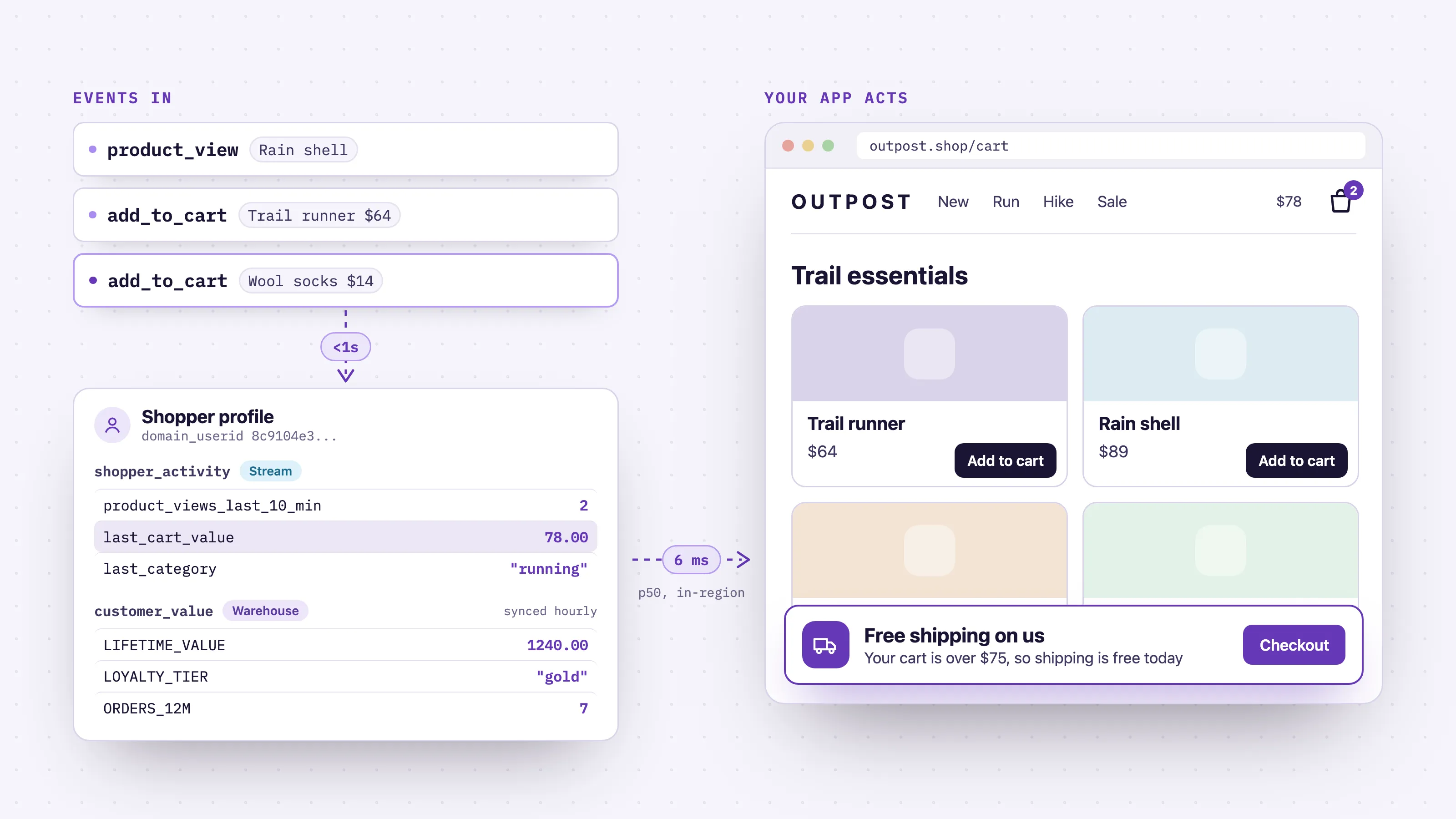
Signals collects behavioral events, computes attributes from them, syncs what your warehouse knows about your customers, and serves both to your app in milliseconds. Each product is one part of that.
 01
Event collection
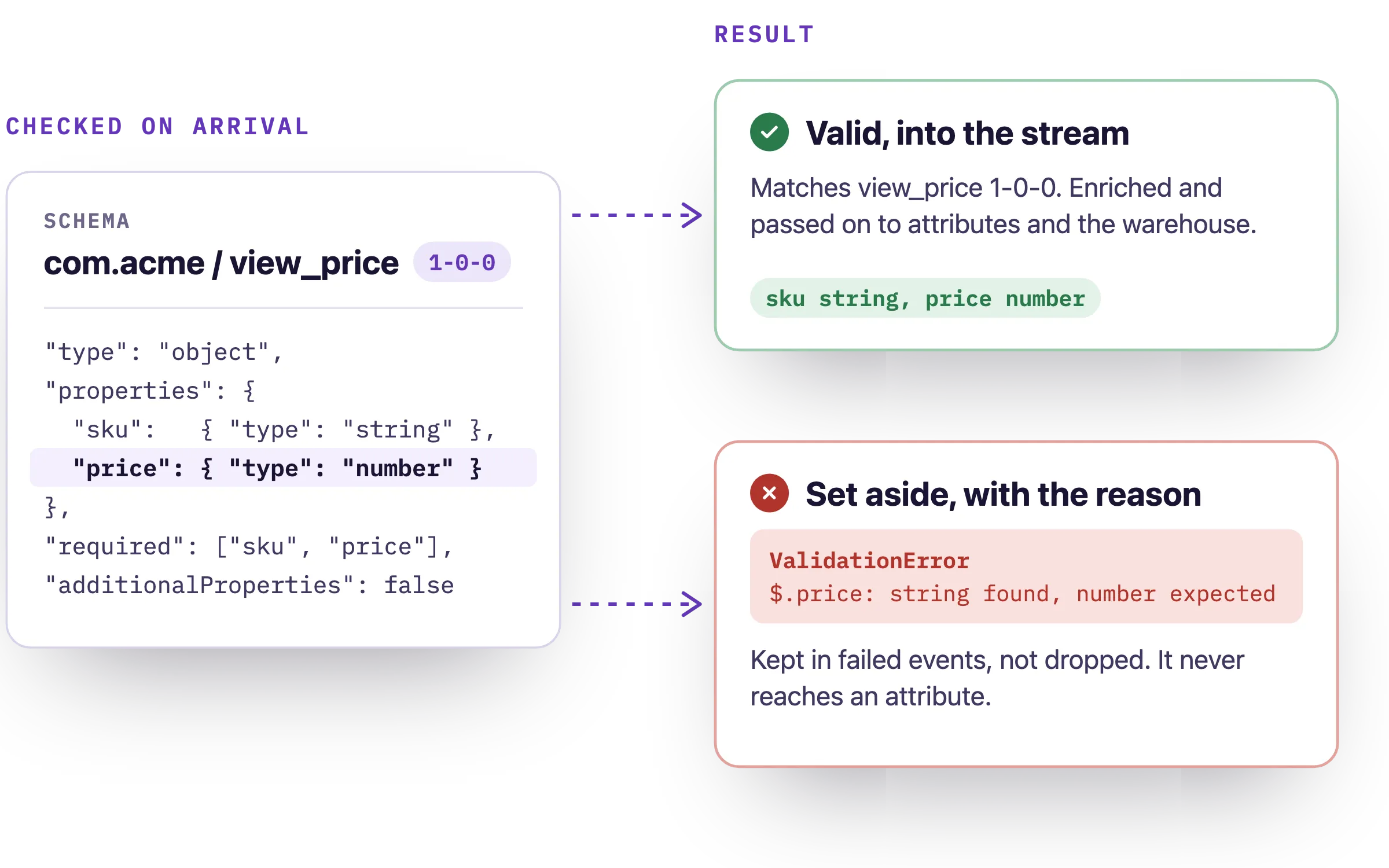
Behavioral events from web, mobile and server, schema-validated on the way in. No event stream to build first.
02Identity resolution
One Snowplow ID per person, across the cookie, the login and the device.
 03
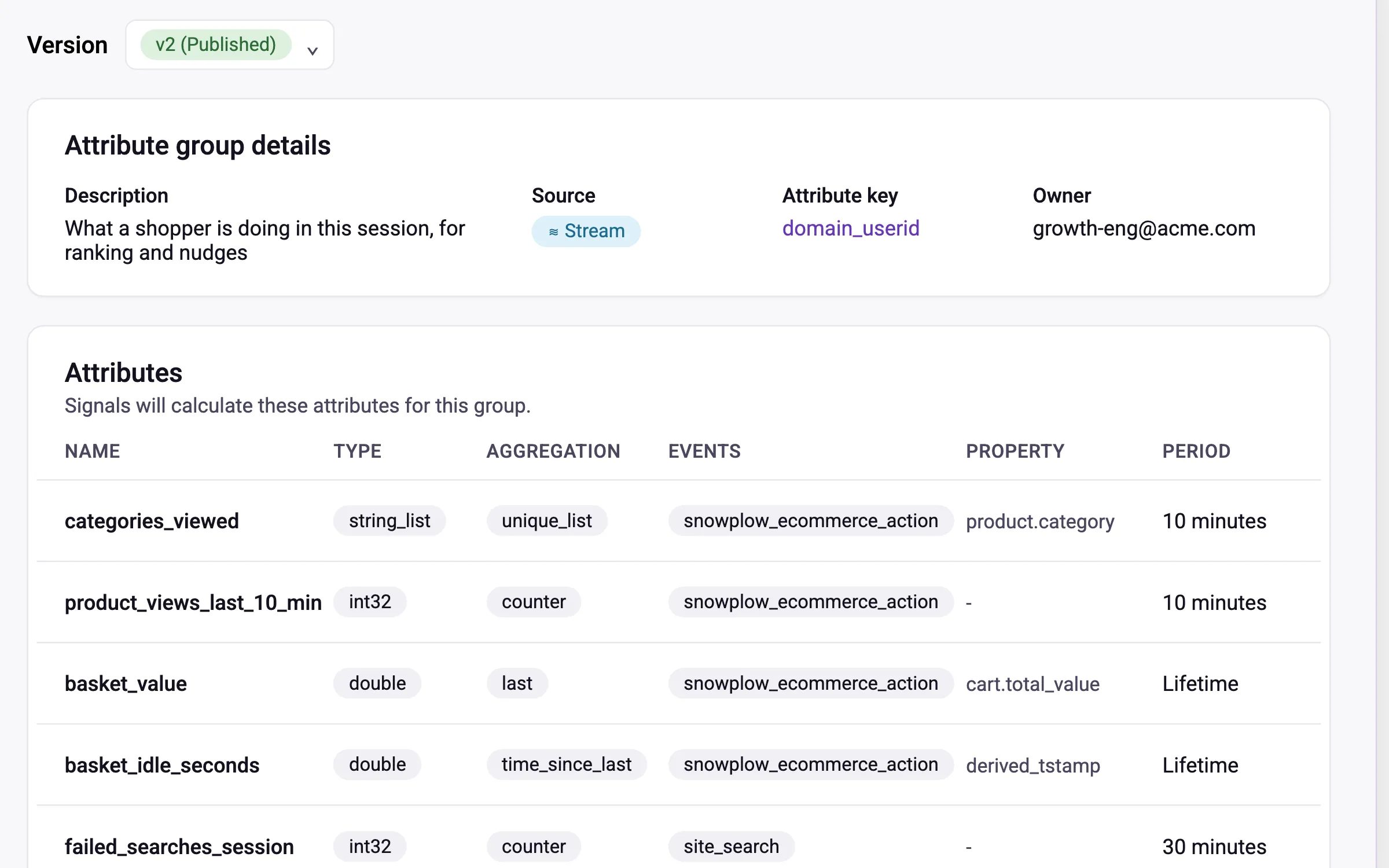
Real-time attributes
Know what your customer is doing right now, served to your app in milliseconds.
04Warehouse attributes
What your warehouse knows about a customer, read from the same service as live attributes.
 05
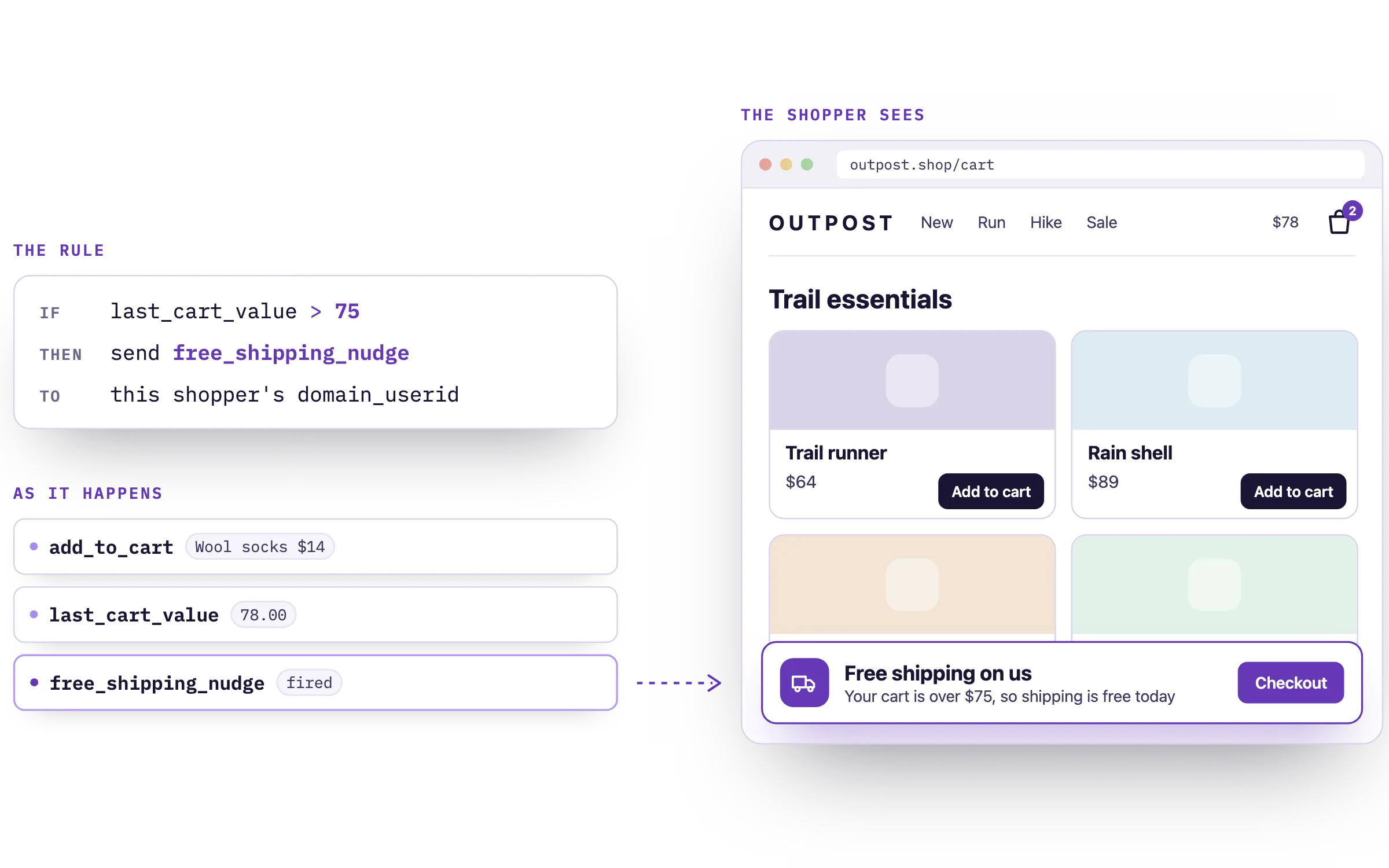
Real-time triggers
A rule that fires the moment it happens, delivered to your app or the tool that acts on it.
 06
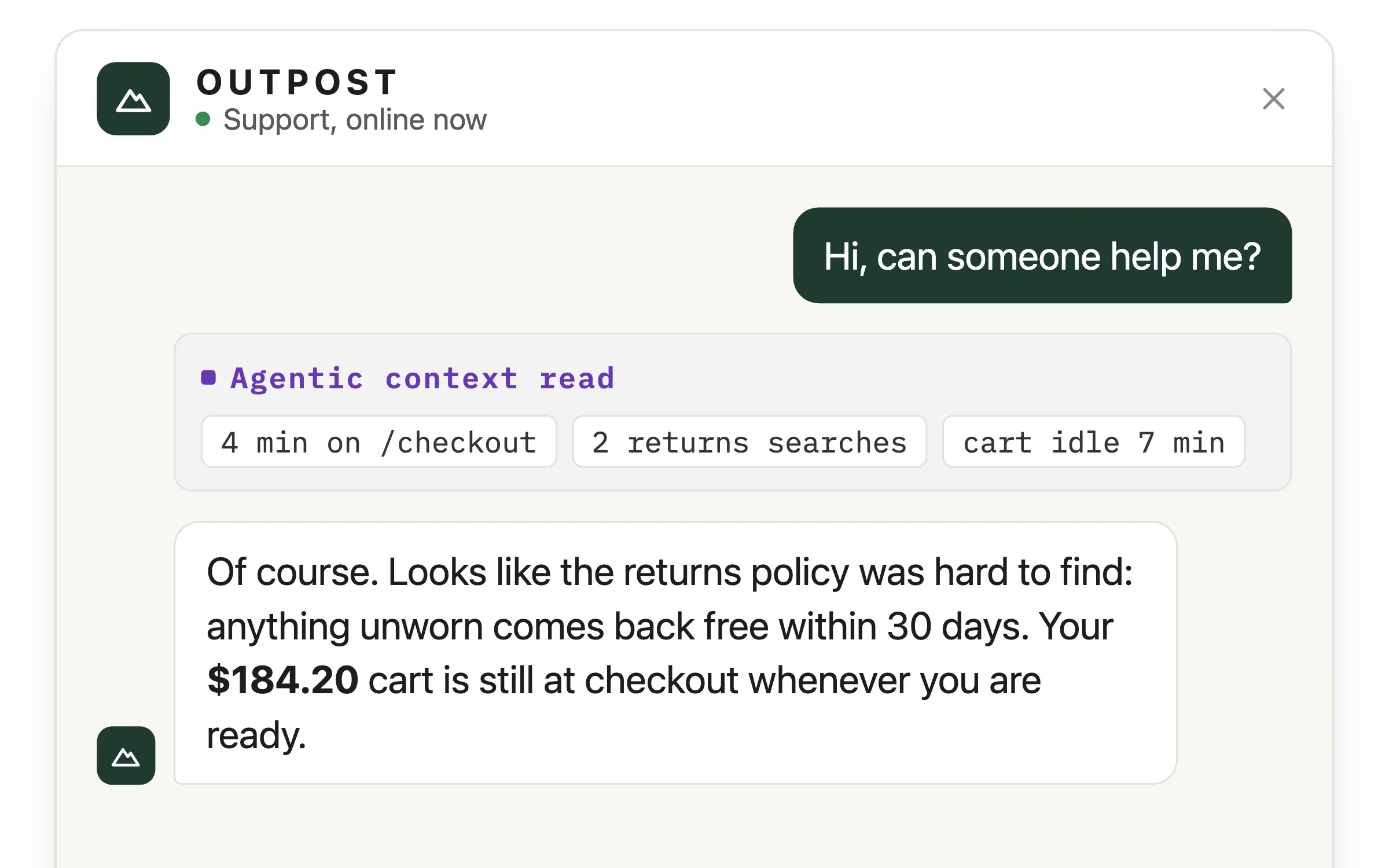
Agentic context
Hand your agent what the customer has been doing, as JSON or a plain-text block for a prompt.
Every part of Signals, in one place.
Snowplow Console is where you set up Signals. You can also define each of these in code and deploy it through CI/CD. Shown with example data.
- Data collection
- Source applications
- Tracking plans
- Event catalog
- Data structures
- Signals
- Overview
- Attribute keys
- Attribute groups
- Agentic contexts
- Services
- Interventions
Each event with the schema it is checked against, how much is arriving and when it was last seen.
- Data collection
- Source applications
- Tracking plans
- Event catalog
- Data structures
An attribute is a name, an aggregation, the events it reads and a window. Every version is kept.
Set conditions over live attributes, then choose the destination and the data sent with each trigger.
- Signals
- Overview
- Attribute keys
- Attribute groups
- Agentic contexts
- Services
- Interventions
Pick the events, the window and the prompt your agent reads alongside them.
Start with one attribute.
Add the SDK, define one attribute, and watch it update as you browse and search your own product. The free tier runs on the real engine: no card, no sales call.